Steel Castings

Superior Performance Through Innovation

Casting Technology’s steel castings

Focused ability to produce one offs or small batch production utilising pattenless technology

Weights

Melting – Max 2000kg
Component (Min/Max) – 1kg -500kg

Dimensions

Furnace -2

Typical Alloys

6A, CA6NM, 316, 304,17-4,15-5

Heat Treatment

Max 2m³

Steel Castings

Castings Technology is renown for providing high-precision Steel Castings to a wide range of industries where strength and corrosion resistance is paramount.

Heavy cracking and severe gas defects are just two of the more common problems encountered by foundries using alloys detailed in the ASTM A890 and A995 standards, but our blend of in-house manufacturing processes and laboratory expertise allows us to produce them to exacting standards on a consistent basis.

This group of alloys offers high strength and corrosion resistance, ideally suited to brine applications at elevated temperatures, along with excellent resistance to crevice corrosion, stress corrosion, pitting and cavitation.

This alloy family are therefore particularly suited to oil, gas nuclear, desalination, and chemical sectors.

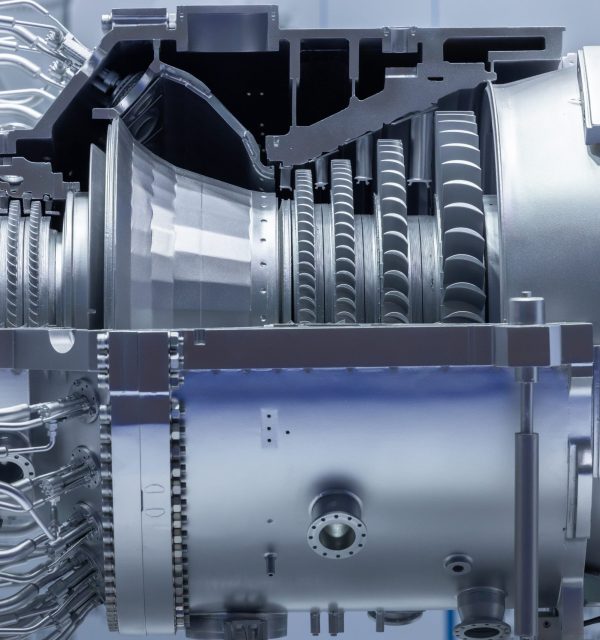
Titanium Castings - gas turbine engine

Sectors

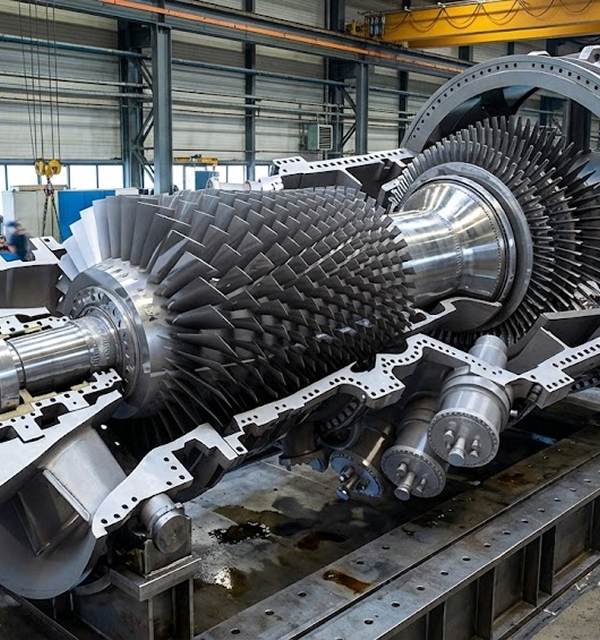
Industrial Gas Turbine

Industrial Pumps

Placeholder Image

Typical Applications

Typical applications are as follows:

Marine: propellers, pumps, valves and rudders


Chemicals: Sulphuric, Nitric


Petrochemicals: Sour oil and gas


Chemicals: Chloride applications


Flues: Gas scrubbing
Pulp and Paper Bleaching


Energy: Geothermal and marine tide / wave applications


Food and Drink: Brewing, bottling, storage


Others: Architectural

The metallurgical attractions of duplex materials include a unique two-phase microstructure of ferrite and austenite phases.

The inclusion of nitrogen in the material assists in processes where wetted surfaces are in contact with high and low Ph media.

Steel Castings demonstrate good weldability, although their use in applications at temperatures below -50’C and above 250’C is not recommended due to the potential formation of deleterious intermetallic phases with heat treatment and quenching being essential after any welding has occurred.

New Product Introduction (NPI)

The breadth and complexity of our internal processes has necessitated the development of robust and effective New Product Introduction processes for both one-off and series production components; supported by over a century of innovation and technical expertise.

The ability to rapidly design, mould, and cast gives our clients the utmost flexibility in terms of component configuration, however, there is more to introducing a new product than the organisation of a production process.

At Castings Technology we have hands-on experience of the following:

NPI (1)

Design & Engineering

We adopt NPI processes to get it right first time!

Design Philosophy
– Understanding the operating conditions and environment in which a casting will perform

Tolerances
– Tolerances of a mating part or assembly

Surface Finish
– Requirements of different operational requirements of a casting

Material Selection
– Considering mechanical properties, lifecycle, corrosion, compatibility, and castability

Casting Simulation
– Using software to predict molten alloy behaviour, mould performance, and flow dynamics

Manufacturing & Process Planning

Manufacturing & Process Planning

Casting Methodology – Including the design, fixturing of the mould, the manufacturing technique, and materials used to make a pattern

Shelling – Selecting an appropriate shelling technique in conjunction with the Casting Simulation software

Thermal Treatment – The treatment a casting requires to meet its mechanical properties

Other External Processes (covering both vacuum and heat treatment – Hot Isostatic Pressing (HIPping), Chemical milling, Machining, Grinding, Inspecting

Manufacturing Route Planning – Developing a route to ensure specific process instructions are contained in a shop floor documentation pack

Quality & Inspection

Quality & Inspection

Inspection – Our capabilities cover NDT, Metrology, and Mechanical Testing functions to adequately measure, test and certify the casting

Quality Requirements – We work with our customers to achieve their quality standards and attain accreditation (for example, ISO9001, ISO9100…).

Operational & Cost Factors

Operational & Cost Factors

Plant Capability – Ensuring all equipment has demonstrated capability to meet customer demands.

Cost – Our NPI process is optimised to drive value proposition.

Testing Capabilities

Castings Technology’s comprehensive accredited metallurgical laboratory, non-destructive testing and metrology departments have facilities to undertake:

  • Optical emission spectrometry
  • Chemical analysis
  • Combustion and gas fusion chemical analysis
  • Hardness testing
  • Microstructural examination
  • Radiography, dye penetrant, magnetic particle, ultrasonic inspection
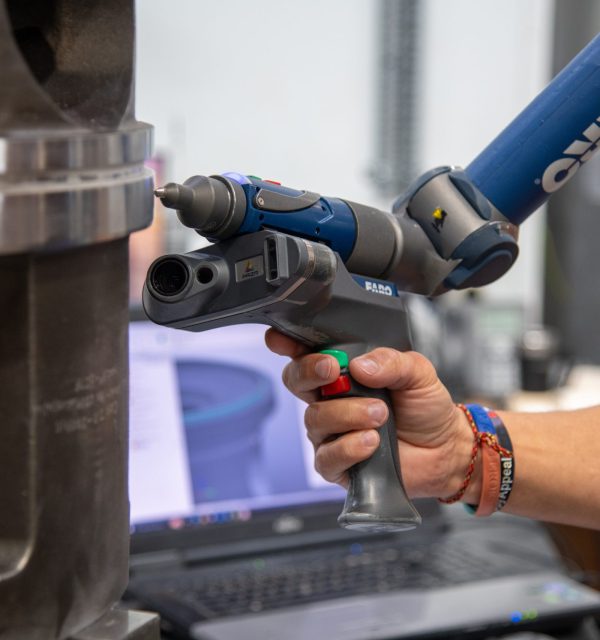
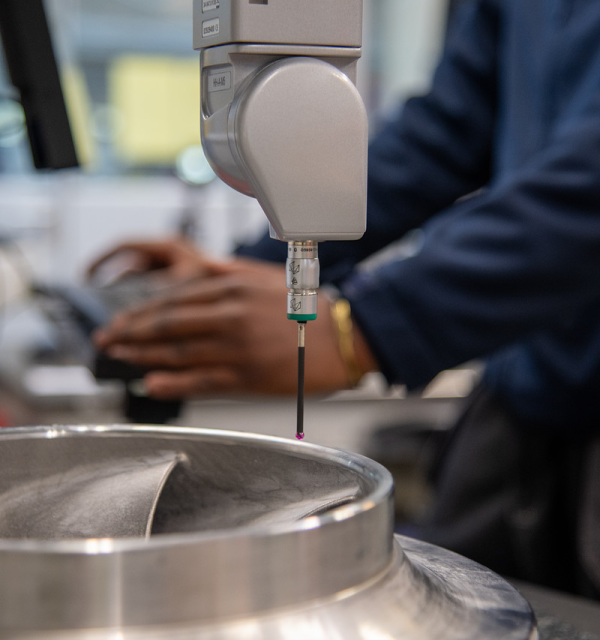
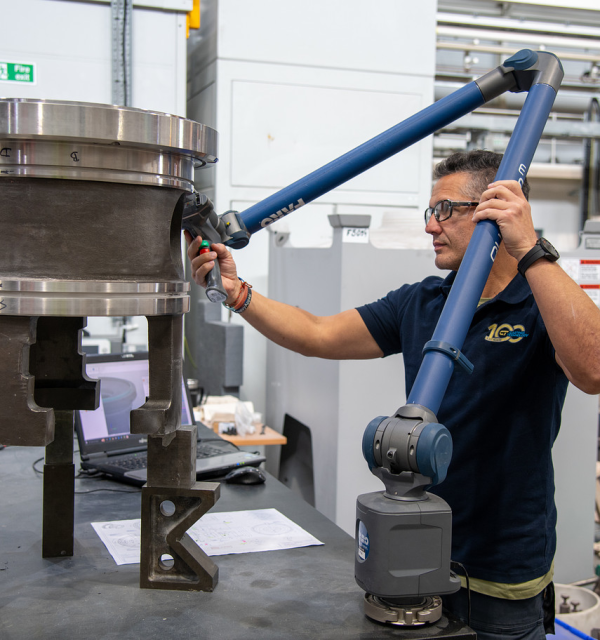
  • CMM and laser scanning
CMM Operative
631f4081420f072b28b8805e45acf598dcc45d5c

Stereolithography (SLA) Pattern Manufacture

The SLA pattern manufacture system is a 3D printing process which passes a laser beam across a bath of photocurable liquid photopolymer resin containing light sensitive monomers and oligomers which cross-link to form polymers.

The UV light in the laser beam cures the resin via a vat polymerisation technique, operating selectively to solidify layer by layer and grow a three-dimensional pattern.

The laser is driven by a CAD/ CAM system which allows for rapid changes to the design of a pattern to be instantly incorporated in the pattern’s final shape.
This fabrication technique is extremely useful for last minute changes or modifications by a customer to the shape or size of a component.

Proof and Finish Machining

Castings Technology recognises that many customers are now seeking vertically integrated supply chain solutions.

To complement our high-quality castings, we offer both proof and finish machining capability to supplying  finished components ready for immediate assembly.

The component will have been subjected to rigorous documented dimensional, X-ray, and NDT processes, ensuring compete compliance with your requirements.

Our skilled machinists are capable of producing surface finished and dimensionally accurate components to our customers’ exacting requirement.

Datum surfaces can also be machined onto castings to aid customers with the positioning of components into jigs to minimise set-up times.

Machining Processes

Our machining processes include:

– Proof machined
– Finish machined
– Turned
– Milled
– Ground
– Splined
– Keyed
– Drilled / reamed
– Tapped
– Broached
– Electric Discharge Machining (EDM)

Non-Destructive Testing

Castings Technology employs highly qualified Non-Destructive Testing (NDT) specialists who have qualifications covering NDT disciplines for both castings and welding.

Our NDT department undertakes X-Ray examinations, ultrasonic testing, magnetic particle reviewing, and dye-penetrant inspection using equipment qualified to Aerospace standards.

Accreditations Include:

– ISO/IEC 17025, Nadcap (AC7114/4)
– Operator Qualifications to ASNT/PCN/NAS 410 (Level II)
– Rolls Royce
– BAE Systems
– 320kV X-Ray

– Company Approvals
– Operator Qualifications to ASNT/PCN (Level II)
– Compression / Shear wave

– ISO/IEC 17025
– Operator Qualifications to ASNT/PCN/NAS 410 (Level II)
– DC/AC Yokes
– Fluorescent / Colour Contrast

– ISO/IEC 17025
– Operator Qualifications to ASNT/PCN/NAS 410 (Level II)
– Fluorescent / Colour Contrast

NDT Operative (Radiographer)
Microscopic Examination

Microscopic Examination

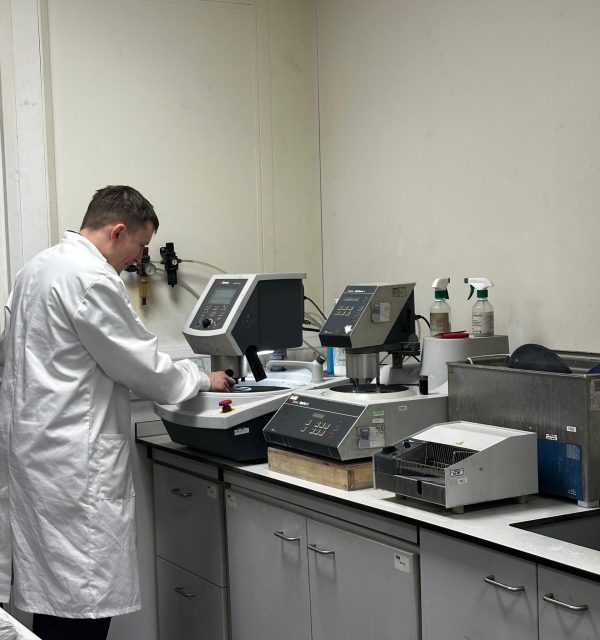
We have the capability to examine casting samples using Stereo and a Scanning Electron Microscope to identify the grain size and phase content together with any cavities or inclusions.

– Stereo Macroscope – x5 to x50 magnification
– Microscope – x50 to x2000 magnification
– Scanning Electron Microscope – up to x80000 magnification

– Grain Size Measurement – ASTM E112
– Phase Content – ASTM E562
– Inclusion Content – BS 7926

Chemical Analysis

Spectro Maxx (Optical Emission Spectrometer, OES)
– Analysis of solid metal samples of alloy bases Fe, Ni, Cu, Al, Ti & Mg

Eltra C & S (Combustion)
– Analysis of Carbon and Sulphur

Eltra O, N & H (Inert Gas Fusion)
– Analysis of Oxygen, Nitrogen and Hydrogen content of alloys

Spectro Xepos (X-Ray Fluorescence, XRF)
– Analysis of almost any material solid or liquid

If a specific analytical technique is not available in-house, our accredited, qualified and extensive network of approved laboratories complements our in-house capabilities.

Chemical Analysis

Contact us

Contact Dave Leary today to find out more about steel castings:

T: +44 (0)114 553 6393

E: d.leary@castingstechnology.com

Or complete the form below.

Dave Leary - Commercial Lead

Access Your Brochure

Thank you for requesting a capability brochure, please use the link below to download.