Today, Friday 5th June 2026, We Are Repairs turns one. A whole year of our online repair business directory…and what a year it has been! We thought we’d take a little look back at our journey and our hopes (and challenges!) for the next twelve months and beyond…
Why We Started We Are Repairs
We created We Are Repairs because we could see something broken in the system. Across the UK, there are thousands of incredibly skilled Repairers – restoring furniture, repairing clothing, reviving ceramics, fixing watches, bringing treasured possessions back to life.
But as repair business owners ourselves, we knew how hard it was to be discovered by the customers who need our services, having to juggle so many hats and become an expert in marketing and social media just to compete in a world built around buying new instead of repairing what already exists.
At the same time, customers who wanted to repair something often had no idea where to start. Finding a trusted repairer to fix your treasured items can be overwhelming.
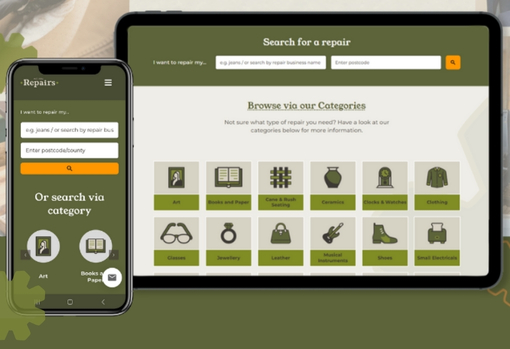
That disconnect mattered to us. So, after talking about it for years, we stopped moaning to each other and started building We Are Repairs as that destination, not only to help bring repair businesses and customers together, but also to shout about the power, joy and many benefits of repair.

What We’ve Seen in Our First Year
The last twelve months have given us so many emotions! We’re incredibly grateful to every single one of you who has supported us and embraced the Repair Revolution with us, both businesses and customers. We have loved gaining a unique insight into what people in the UK are trying to repair, restore and save.
-
Over 143,000 of you have visited http://wearerepairs.com to find a repair business with an average engagement rate of 78%.
-
We’ve had more than 46,283 different items searched for on our search bar
-
The most popular search…’jeans’ with 4% of all searches, closely followed by teddy bear at 3% and chair & clock both with 2%
-
The most visited Category page was ‘Ceramics Repairers’
-
We have gone from 10 followers on social media on launch day to now having over 18,000 of you.
-
We’ve averaged 59K+ Google search hits per month and …
-
Grown the Directory from just our two repair businesses to now having over 3,000 businesses listed.
We’re proud to have reached these numbers in year 1 but more than just being numbers, it’s what these numbers mean. Each number is an action taken against the current throwaway system. Every single action taken, from website visit to social media engagement, is a choice from people actively choosing repair and restoration over replacement and recognising the value in what they already own. That is absolutely worth celebrating in our book!
Taking the Repair Voice Further
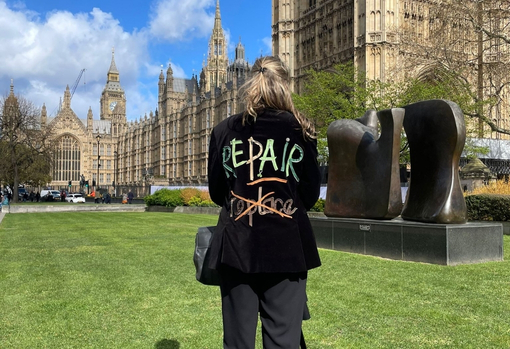
One of our proudest milestones this year has been representing the repair business sector at the national level, including a one-to-one meeting with Mary Creagh CBE MP and trips to Parliament. We believe it is vital to ensure that the voices and experiences of repair businesses help to shape policy and drive positive environmental and economic change. For too long, the voice in the ear of government officials has been global multinationals and mass manufacturing. Decisions that benefit them do not benefit the rest of us. But supporting small independent businesses helps us all to thrive.
Repair deserves to be recognised not just as a sustainability issue, but as an economic and cultural opportunity for the UK. This is what repair businesses can deliver, and in many cases are already delivering.
If we, as a country, are serious about changing behaviour from replace to repair, then we need to make sure that repair is accessible for all people in society.
To do this and embed a Circular Economy, there needs to be:
-
Better visibility for repair services
-
Greater support for skilled trades & easier pathways to apprenticeships
-
Stronger support for small businesses that already work sustainably
-
Policies that make repair easier and more accessible – and not just for free repair cafes but for all three pillars of repair (Repair Businesses, Repair Cafes and DIY Repair).

Our Challenge to the Industry
Over the last year, one thing has become impossible to ignore. Repair still isn’t getting the support, visibility or recognition it deserves.
Too often, we see repair treated as an afterthought. Recycling gets the spotlight and replacement remains the default. Meanwhile, the businesses and charities keeping repair alive are expected to fight for visibility in systems that weren’t built for them.
We’ve also seen growing levels of greenwashing around sustainability.
Brands are talking about circularity while continuing to promote overconsumption and produce record levels of stock. Campaigns celebrate recycling while completely ignoring the environmental (and economic) value of simply keeping products in use longer. Companies claiming sustainability leadership without meaningfully supporting repair infrastructure or skilled repair businesses.
Endless “sustainable business grants” are available for companies to put in solar panels, produce carbon emissions reports or improve their recycling bins but absolutely no support for repair businesses that are already promoting green skills and keeping items in use.
Recycling alone will not solve the problem we have. Carbon Emissions reports and planting trees with every order might look great on the surface but they are not solving the problem either. A lot of the time these tactics are being used to greenwash people into thinking the company is more sustainable than it actually is.
Repair sits higher up the sustainability hierarchy for a reason. Repair and re-use IS the most accessible and easy-to-implement solution. The most sustainable product is the one you already own.
But the reality is that promoting repair and reuse will hit the profits of those in charge, and that’s why it is often overlooked and even when repair is supported, it is free Repair Cafes that get the promotion because there is no threat of free repair taking business or profits away. Free repair alone will never have the capacity to provide a repair option that is convenient and accessible to everyone in society.
We Are Repairs are calling this out. We are fighting for:
-
Greater visibility for all types of repair
-
Better support for independent repair businesses so that they can have a fair shot at surviving and thriving against systems built around different values
-
More honest and collaborative conversations around sustainability – this is not a situation that one company can solve on their own. True sustainability lies with us collaborating and supporting each other to be stronger. Not destroying businesses one by one until there is one overarching “winner”.
-
A culture that values longevity over disposability
-
And for the government to release its long-overdue Circular Economy Growth Plan.
Because repair businesses are a vital part of the future, and the longer we wait for the Circular Economy to kick in, the fewer independent businesses with the required skills there’ll be.
Why Repair Matters More Than Ever
Repair Reduces Waste
Every repaired item is one less item sent to landfill or the incinerator. From clothing and furniture to homeware and electricals, extending product life has a direct environmental and carbon-reducing impact, not to mention the social value and ability to provide quality goods to the second-hand market.
Repair Supports Skilled Trades
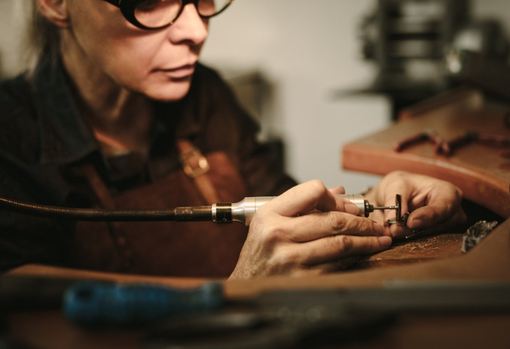
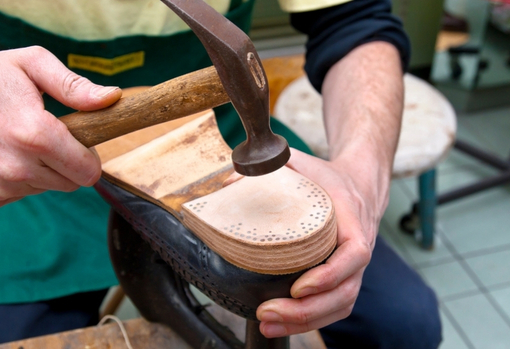
Behind every repair is a skilled person. Repairers preserve craftsmanship, specialist knowledge and practical skills that are increasingly undervalued in a disposable economy.
Repair Saves Money
For many households, repair is also becoming an economic decision. When looked at as a long-term decision, restoring a quality item costs less and lasts longer than replacing it with a cheaper alternative, especially when you look at ‘cost per wear’ or ‘cost per use’.
Repair Changes Mindsets
Perhaps most importantly, repair changes how we think. It encourages people to value what they already own. To care for and maintain items in your home rather than discard them. And to choose longevity over convenience. By making these changes to our thought patterns, we stop chasing the dopamine hit of the next purchase and start realising that what we have is enough. When we have a connection to the items in our wardrobe and in our homes, we build a story with that item and carry its memories and meaning forward, which becomes a far more powerful feeling than the quick dopamine hit from the ‘Buy now’ button.
The Future of Repair in the UK – Join the Repair Revolution Movement
We believe the next twelve months are a huge opportunity for repair; it is on the cusp of a turning point. The old model of endless replacement is starting to lose its appeal and people are recognising that we no longer want to live in a world where we are treated as consumers whose sole purpose is to fuel the profits of a small number of billionaires. We are all humans who deserve to enjoy our lives, not just consumers who need to be marketed at to sell more products.
We want better quality. Better longevity. Better service. Better value for money.
And we increasingly want to support businesses that share those values.
That creates an enormous opportunity for repair as a major part of the future economy. Every single decision to spend your money locally with independent businesses, to repair an item not replace it and buy second-hand, not new, gets us closer to the values above. Building a truly circular economy takes all of us making small changes to our buying behaviour.
So here’s our challenge for the next year:
Before replacing something, ask one simple question first:
Can it be repaired?
And if you’re a Repairer, maker, restorer, craftsperson, or independent repair business, please join us. The future of repair won’t be built by one company alone. It will be built by a community of skilled people determined to prove that repair matters, and at We Are Repairs, we’ll keep fighting to make sure those businesses are seen, supported, and celebrated.
Article suggestions for you
 Repair Cafes have spread up and down the county bringing the spotlight to repair culture but is there a hidden cost to their success? Take a look at how ignoring repair businesses devalues repair as a skill and why repair must be treated as a skilled, paid profession if it is to truly thrive in the UK.
 Rethink Valentine’s Day with gifts that truly last. From repairing sentimental items to sourcing second-hand treasures or making something by hand, discover sustainable, heartfelt ways to celebrate love while reducing waste and environmental impact. Thoughtful, creative, and kind to the planet - love the way it was meant to be.
 This Christmas, step away from the rush and embrace mindful, eco-friendly living. Explore how slowing down can reduce consumerism, improve wellbeing and help you reset habits for a more intentional and sustainable 2026. This is your sign to take a well deserved rest!